
If the tenant of a home dies, the tenancy does not run on until the family is ready. The law names an end date and the landlord expects the home back empty on that day. Depending on the day of the death you have two to three months for that, and in that time a funeral has to be arranged as well.
Which date applies to you depends on who stays behind in the home. After that it is mainly a matter of counting back: giving notice, the pre-inspection, sorting, clearing and handing in the keys.
When does the tenancy end after a death?
The rules are in article 7:268 of the Dutch Civil Code. There are four situations, and each has a different term.
| Situation | What happens to the tenancy |
|---|---|
| The tenant lived alone | The tenancy ends by itself at the end of the second month after the death |
| The heirs want to be rid of it sooner | They may give notice with effect from the end of the first month after the death |
| A co-tenant stays behind | The tenancy continues in the name of the co-tenant, who may give notice within six months |
| An occupant stays behind who is not a co-tenant | That person may stay for six months and must ask the court in that time to become the tenant |
An example for the first rule: if someone dies on 9 October, the tenancy ends on 31 December. If the heirs give notice with effect from the end of the first month, that is 30 November. That saves a month of rent, but the home then has to be empty a month earlier as well.
The spouse or registered partner is automatically a co-tenant. For an occupant who is not a co-tenant the bar is higher: he or she must have had their main residence there and must have run a lasting shared household together with the tenant. According to the Juridisch Loket, the Dutch legal advice service, a court does not readily accept that for an adult child living at home. In practice such a child usually has to leave the home after two months.
How to give notice to the housing association
Even if the tenancy ends by itself, the landlord wants to know who he can make arrangements with. So report the death in the first week, even if you do not yet know when the home will be empty. The housing associations in our region ask for roughly the same things:
- A copy of the death certificateAt Woonforte, Woonpartners Midden-Holland and Portaal that is the only document you send with it. They do not ask for a certificate of inheritance for the notice.
- One contact personAn heir or the executor acts on behalf of the family. Woonforte uses a form for this, with which you register as the representative.
- The end date you wantPortaal has a notice period of one month. Woonforte wants to have received the notice within two months of the death.
- An appointment for the pre-inspectionAsk for it straight away. The report states what has to come out and what may stay, and that decides how much work the handover will be.
If the deceased rented from a private landlord, send a letter or email with the same details and ask for written confirmation of the end date.
First, clarity about the inheritance
What you may do with the contents depends on the choice you make as an heir. With a rented home that matters more than with an owner-occupied home, because the term keeps running while you are still thinking.
- Unconditional acceptanceYou may empty the home and hand it back. You are liable for the debts, though, with your own money too. The rent and the repair costs fall under that.
- Acceptance under benefit of inventoryYou may clear the home and put belongings into storage. Valuable contents should be sold to pay debts. According to the Juridisch Loket you do not have to sell photo albums and other belongings that mainly have sentimental value.
- Rejecting the inheritanceYou take nothing out of the home, not even photo albums. If all the heirs reject the inheritance, the repair work and its costs are for the landlord’s account, according to the Woonbond, the tenants’ association.
If you have not chosen yet, take nothing of value with you and sell nothing. Anyone who does can have accepted the inheritance unconditionally by doing so. The step-by-step plan for relatives covers that in more detail. For your own situation the civil-law notary is the right place to go.
Counting back from the end date
Once the end date is fixed, plan backwards. Most families need more time for the sorting than for the clearing itself.
- Week 1Report the death to the landlord, ask for the pre-inspection, have the post redirected. Put papers and valuables in one place.
- Weeks 2 to 4The family sorts out what stays. Put a sticker on everything that is going with someone, so that nobody has to decide that on the day of the clearance.
- No later than three weeks before the end dateSite visit by a clearance company. With us that is usually possible within 1 to 3 working days, and within 24 hours after that you have a fixed price.
- One to two weeks before the end dateThe clearance. An average home is empty in one day, including the loft, storeroom and shed.
- The last few daysFinal inspection with the inspector, note the meter readings and hand in all the keys.
Keep a few days free between the clearance and the final inspection. If the inspector rejects something, you can still have it put right. You can read exactly what an inspector checks in the checklist for a broom clean handover.
What if the home is not empty in time?
Then the bill does not stop on the end date. The law gives the landlord the right to compensation equal to the rent, for every period in which the home has not yet been given back. If he also suffers loss, for example because a new tenant can move in later, he may claim that too.
If the heirs have accepted unconditionally, they pay that out of their own assets if necessary. With acceptance under benefit of inventory the landlord can only turn to the estate. For repair costs there is a limit: the landlord may only charge what is in the pre-inspection report.
If you can see the date getting tight, call the landlord before the term runs out. A week’s extension can often be arranged beforehand and seldom afterwards. If there really is a rush, an urgent clearance is often possible within 24 to 48 hours.
Deposit and final settlement
If the deceased had paid a deposit, that amount belongs to the estate. Since the Good Landlordship Act (Wet goed verhuurderschap), the landlord pays the deposit back within 14 days of the end of the tenancy. If he keeps part of it, he has 30 days and must put in writing which costs he is setting off. That is only allowed for rent arrears, service charges, damage and the energy performance fee.
Housing associations usually work without a deposit, but they do send a final settlement. Woonforte, for example, sends a final statement within three weeks. On the last day, note the meter readings, take photographs of every room and cancel energy, water and internet with effect from the end date of the tenancy.
A room in a nursing home goes faster
If your relative lived in a nursing home, the term is much shorter. Under the general terms and conditions of the sector associations ActiZ and BTN, relatives get seven days to empty the room. After that the institution may remove the belongings itself, store them for three months and charge the costs of that to the heirs. An institution can have its own terms, so ask on the ward which date they apply.
If you want to hand over the clearing
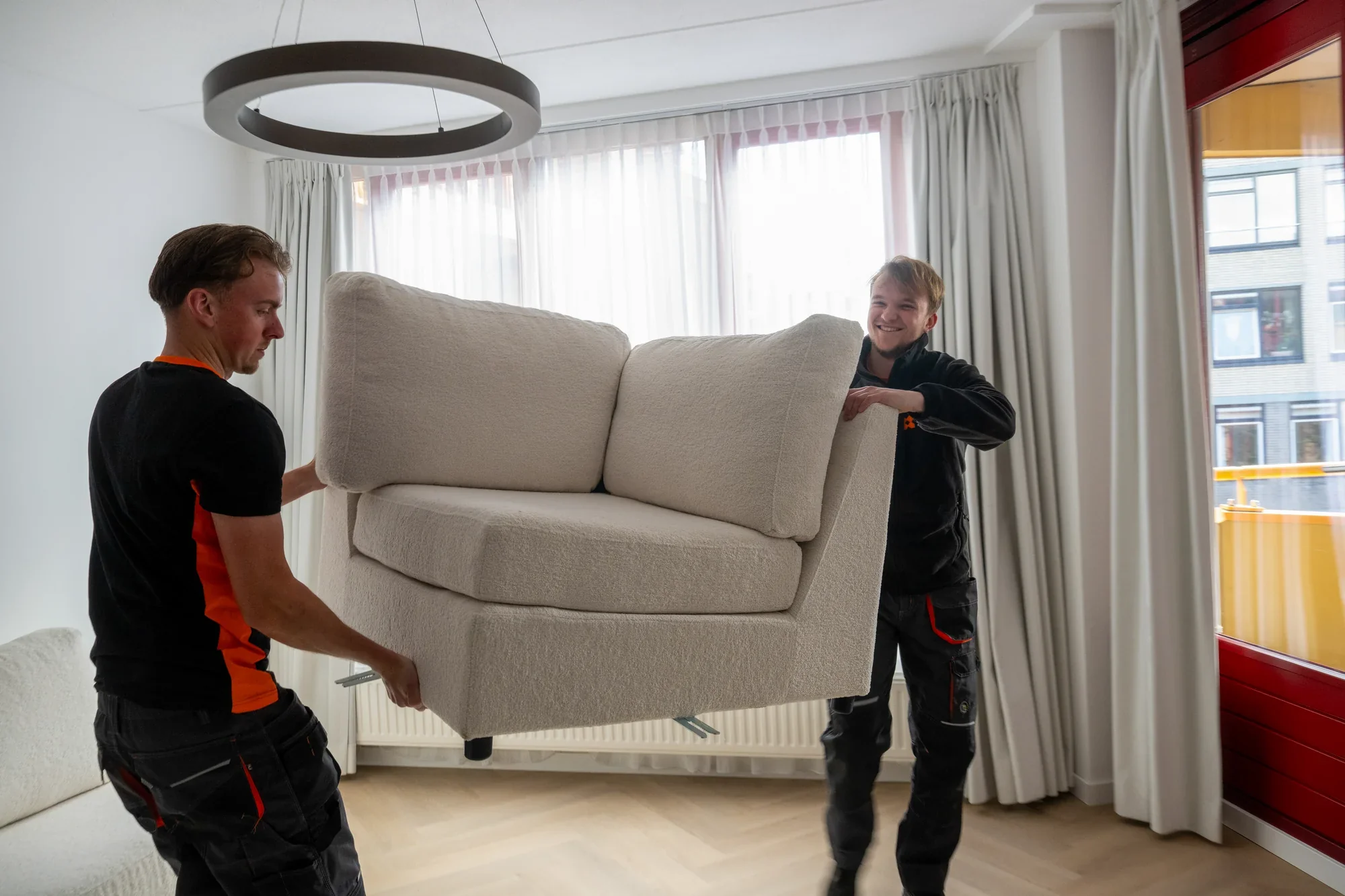
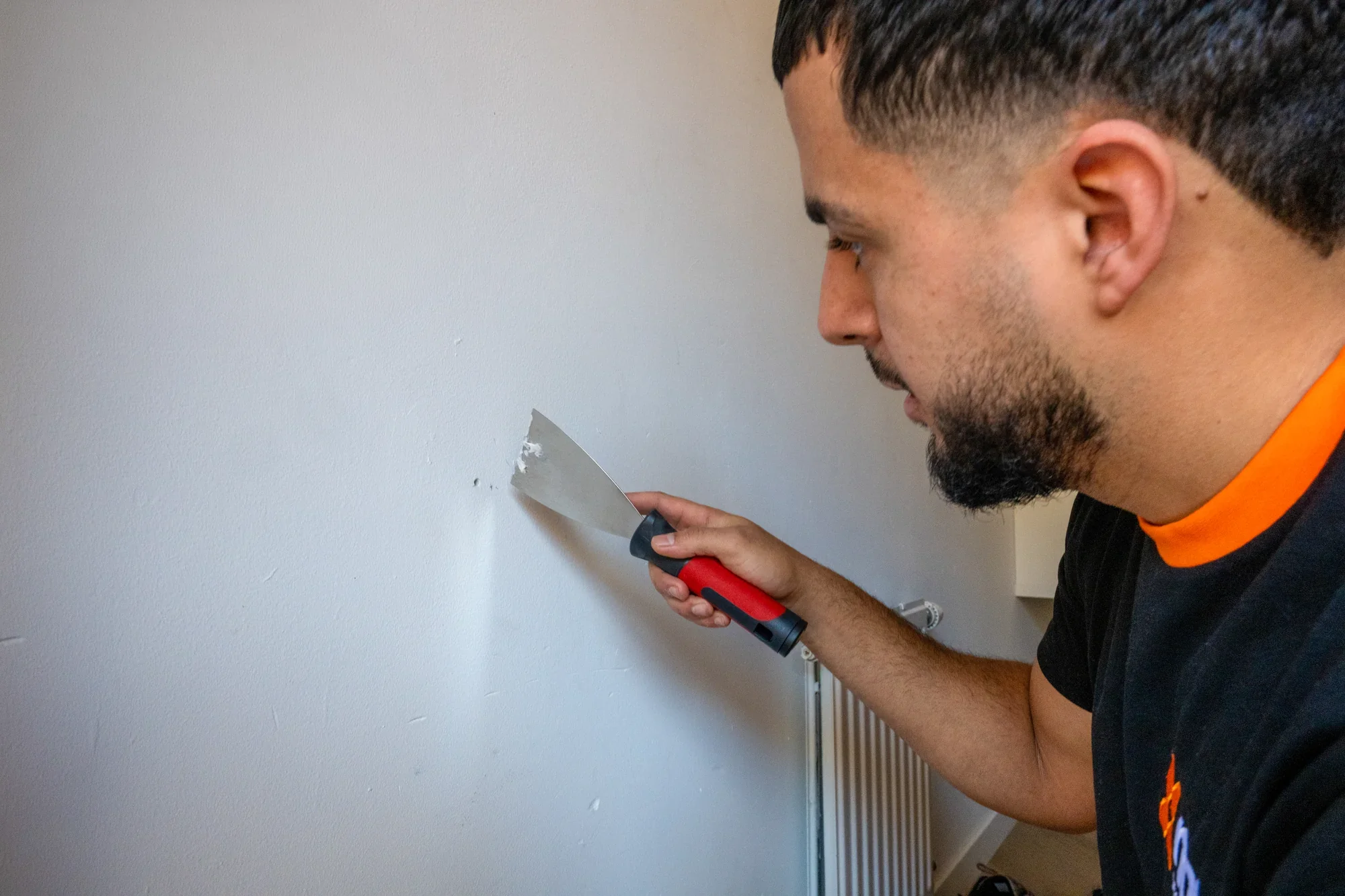
We clear rented homes after a death and hand them back broom clean, with photographs and a handover report for the landlord. We take out floor coverings, curtain rails and lamps if the inspection report asks for it. We set papers, photographs and jewellery aside. We only take anything away once the heirs or the executor have agreed.
There is more about how we work on the page house clearance after a death. We drive from Bodegraven and know the handover lists of the housing associations in places such as Gouda, Woerden and Alphen aan den Rijn. Tell us the end date of the tenancy through the contact page or call 085 7444 039, and we will plan back from it.